About the washer
What the washer does on a fire line, and how to specify it.
What a washer does at a support point
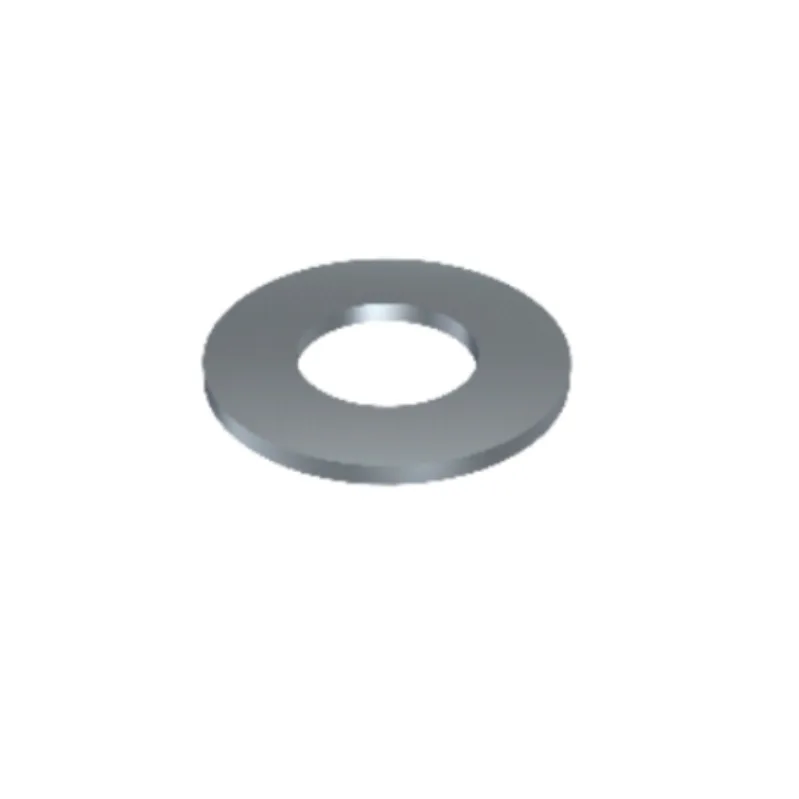
The washer sits under the nut or bolt head and does two quiet jobs. It adjusts the clearance between the fastener and the part it bears on, and it widens the bearing surface so the load from the threaded fastener is spread over a larger area. On a pipe support that second job is the one that matters: it keeps a concentrated load from digging into the pipe or the anchor.
Why it is not optional
A fastener tightened directly onto a thin edge or a soft surface concentrates the load in a small circle and can deform it. The washer moves that load out onto a flat, wider face. It is the cheapest part in the assembly and one of the most likely to be left out, which is why it is worth specifying it on the line rather than assuming it.
Material and finish
Carbon steel, electro-galvanized, the same spec as the nuts and bolts it is used with, so the finish does not corrode ahead of the fastener it sits under.
Ordering it right
Send the line with the rest of the assembly rather than as a single part. State the size against the pipe outside diameter it serves, the finish, and the count. Pair it with the matching threaded rod, nuts, washers and anchors from the same range, and flag whether the design needs the fire-rated, FM/UL marked version, so the support arrives with the pipe instead of chasing it later.